
Caregiving: The Burden and Beauty of Giving Care (6 minute read)
How do we define caregiving? Is it simply raising our children or supporting a spouse or parent through life’s trials with attention and sacrifice? Or does caregiving only “count” when it involves tending to a loved one during illness, disability, or the effects of aging?
The American Psychological Association (APA) reminds us that caregiving is a verb—something we do across the lifespan. Our need for care does not discriminate by age. At different points in life, we all give care, and will most likely benefit from it too. This blog explores caregiving during more intensive, sustained times of significant need like supporting individuals with congenital conditions, developmental disabilities, mental illness, and chronic health challenges.
The National Alliance for Caregiving (NAC) highlights the financial, physical, and emotional toll experienced by families who care for loved ones around the clock. Organizations like the Family Caregiver Alliance, funded by the NAC offer meaningful support to those on this journey—from assessment and care planning to hands-on caregiving skills, wellness programs, respite services, and even legal and financial consultation resources. These supports exist to help caregivers feel less alone and more equipped.
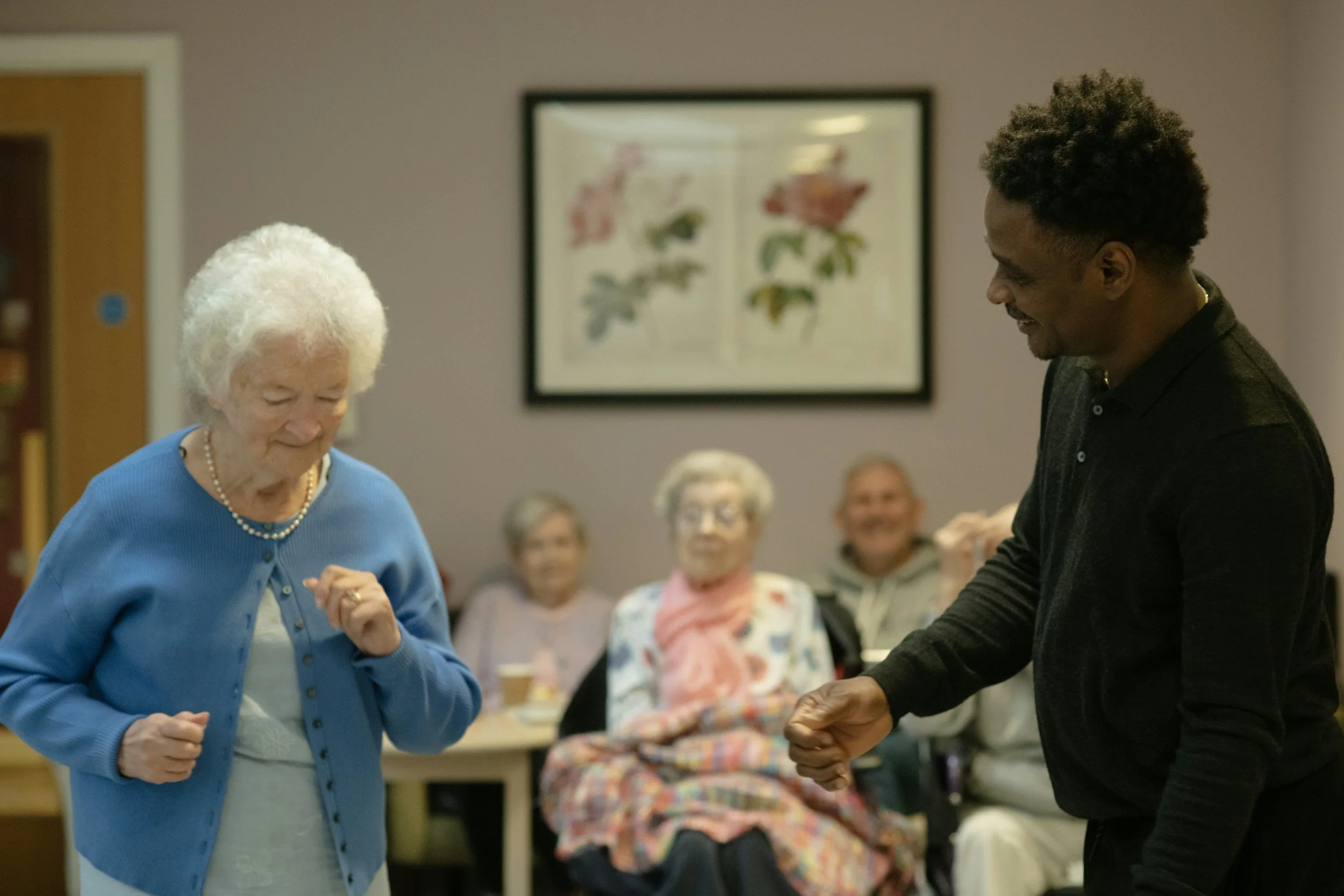
I hope someone dances with me when I reach this age.
I don’t have extensive experience as a “technical” caregiver—unless you count the 16 years I’ve spent as a mother, and the 3.5 years I spent as a daughter to a parent with Stage IV cancer. My children are mostly healthy, and my father was too—until he wasn’t, for nearly four years.
In my attempts to care for my dad from afar, I supported him by researching cancer treatments, seeking second opinions and alternative options, sending comforting gifts, and encouraging him with cards signed by my whole family—just in case one might be the last. Still, every few weeks, for years, I made the drive to my parents’ home. During that time, I was balancing work, managing a household, raising my daughters, and supporting my husband as he navigated his own work-life balance.
I don’t want a medal or a cookie—well, maybe a gooey chocolate chip one. My caregiving for my father was often from a distance and, at times, inconsistent—even during his two-week stay at Penn Medicine for a surgery that ultimately couldn’t be completed. By then, the cancer had already spread beyond the area they had hoped to treat, making our future feel uncertain and dim.
In general, caregiving from a distance is less time-consuming and physically demanding than providing daily, hands-on support. But when your heart longs to be close to a struggling, sick family member and distance stands in the way, it complicates both your grief and your efforts. Those who are up close and in it every day carry an extraordinary weight—exhausted, scared, and often unseen. For more on hometown heroes, listen to this A Love Letter to the In-Town Problem Solvers episode, in which Kelly Corrigan highlights a brother thanking his sister for holding down the fort where their parent with dementia lives.
Often, I felt almost jet-lagged from the urgency of trying to keep my dad alive—buying any electrolyte drink I could find at Costco, making sure he was taking CBG and CBD oils to kill cancer cells and aid with digestion, and cooking nutritious foods for him so he could rebound back from the lethal chemo that shocked his body for days, or weeks.

Over that same period, my daughter underwent three-foot surgeries and lived with persistent pain throughout her teenage years—whether exercising or simply walking. I took her to countless physical therapy sessions, cried with her through frustration and pain, and lost hope in medical interventions to restore something as fundamental as walking with ease.
I guess I’ve officially entered mid-life.
Today, I write from a hospital waiting room during her third surgery. Strangely, I feel a sense of calm here. Someone else is carrying the weight of fixing what I cannot.
Around me are other parents—tired, anxious, hopeful. This room feels like a small, organic United Nations. These walls do not discriminate. We are all the same here—Black, White, Indian; wealthy and barely making ends meet; partnered, single, divorced; Christian, Jewish, Muslim. We wait together, united by love and fear, hoping for minor mercies all the way up to miracles.
I love the other mothers who share this space with me, yet we have never met.
You see both beauty and heartbreak in hospitals. While standing in the cafeteria, picking through unappealing food, I heard something unforgettable. A little boy, as his mother busied herself with his stroller, said, “Mommy, I am right here. Do you see me?”
To an attachment therapist, those words carry real weight: “I’m okay. Do you see that I’m okay? And does knowing that I’m okay help you feel okay, too?” Moments like that feel almost transcendent—like an artist going on a mural trolley tour for the first time (shout out to the Philadelphia Mural Arts Tours).
At the end of the day—and at the end of our lives—we want our loved ones to know that we will be okay, and that they will be too, despite the pain. We will be okay together because of love. Love is like that—it becomes its own kind of medicine, carrying us through the hopeless and impossible.
Loving is hard work and we don’t ever quit loving—even after someone dies. But caretaking fills a purpose, a role that is greater than anything else we could ever do. It’s a privilege I take seriously—sometimes too seriously—which can leave us feeling burned out, resentful, and lonely.
Sometimes life and caregiving have a way of steamrolling over you. Your spirit feels flattened, but your body keeps going—because it has to. Below are 7 things I’ve been thinking about that might help you weather the steamroll.
1) Check out this link on Caregiving 101- I am aware that “caregiving creeps up on you”. It’s usually progressive in nature—emerging alongside with an aging parent or a chronic illness. One of the first steps mentioned on this site is to “identify yourself as a caregiver”. I love how clearly that sets a boundary from the outset. Claim the job title that you have become. You are moving beyond being a daughter or son, sister or brother, mother or father, wife or husband—you have become a caregiver, whether you feel capable or ready.
2) Join a caregiving support group. Being a caregiver can feel isolating. There are many types of groups—those for parents of children with cancer, spouses caring for a partner with dementia, and families navigating mental health or addiction challenges.
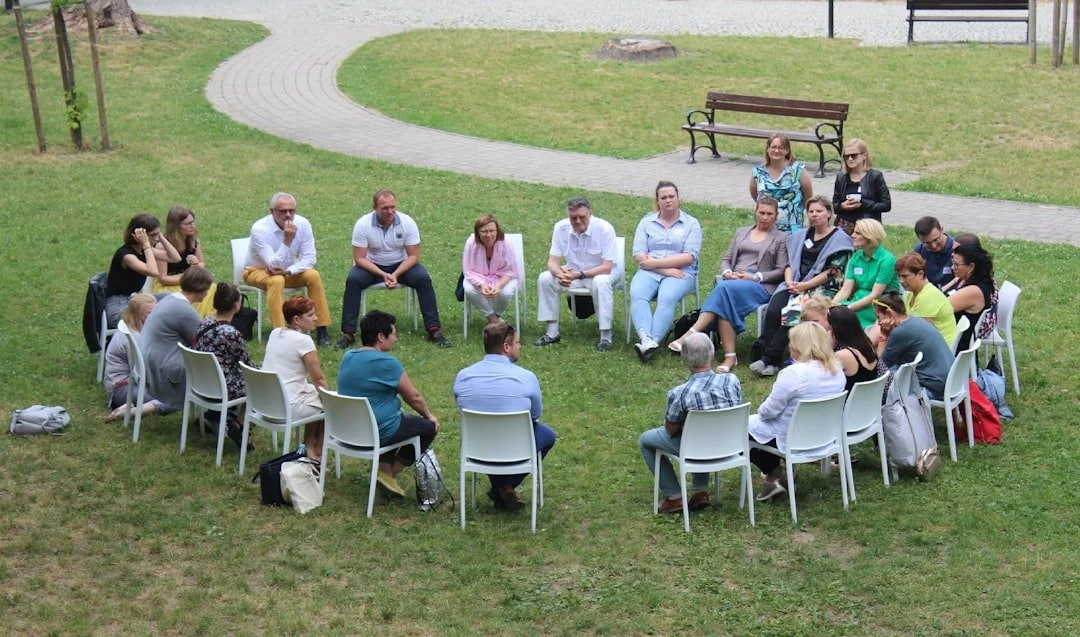
An outdoor support group—even better!!!
3) Shortly after treatment or surgery, take any expectations off yourself, if possible. Prioritize your caregiving role—it may be the only one that truly matters today or this week—and allow other responsibilities to fall away as needed. Work should understand. Note: I recognize that this perspective comes from a place of privilege, and that not everyone has the flexibility or financial security to step away from work.
4) Ask for help. I’m aware that in-home medical support is often too expensive. Therefore, it may be worth paying a trusted friend or neighbor for a few extra hours each week so you can have some respite. Or perhaps you could arrange a barter system—trading help with cooking, cleaning, or childcare in exchange for light supervision for your loved one?
5) Realize that you cannot rescue anyone from their condition; you can only love them through their best and worst days. Loving them is enough, but loving well also involves sacrifice and selflessness.
6) Make a caregiving schedule. I have family members who care for their aging mother every Saturday. Saturdays tend to be her loneliest days, as there are often no activities scheduled for seniors at her facility on those days. To help, the four siblings each take one Saturday a month, rotating so the responsibility is shared among them.
7) Get comfortable with prioritizing caregiving over other responsibilities at times while also intentionally prioritizing self-care. We’re aiming for some sense of balance here, even if it’s something as simple as a 20-minute walk outside each day. If you don’t take care of yourself at all, over time you may begin to resent your caregiving role and develop quiet “martyrdom” thoughts that you don’t express—which can contribute to burnout.
I like the analogy Dr. Barry Jacobs uses: think of caregiving as a marathon. If someone hands you water along the course, you wouldn’t refuse it—you’d take it so you can keep going and finish the race. In the same way, what do you need to replenish your body, mind, and spirit so you can continue in this role over time?
*Extra Credit- Name the weight of caregiving and all of its parts by writing it down and sharing it with a friend or a trusted counselor. Then list your counterweights. These are intentional practices, relationships, and rhythms that keep us grounded and emotionally balanced when life feels heavy. Thanks for this concept, Shannan Martin!
That’s it for now, friends. I hope you found this piece helpful.
Caregiver—I know you are already resourceful and that you are doing the best you can every single day. I see you. I see your efforts. I see how tired you look. I hear how good a full belly laugh sounds on you, because you often live in a well of suffering that you keep to yourself, assuming others can never understand your plight.
That laugh is a needed contrast to your suffering as you walk alongside your loved one. I respect you.
LoveWell,
Kim
P.S. Dr. Barry Jacobs (a PA-based provider), specializes in Caregiving. I once heard him speak at a Psychotherapy Networker Conference, and I highly recommend his helpful book on Caretaking here. I found his chapter, “Last Days,” in The Emotional Survival Guide for Caregivers: Looking After Yourself and Your Family While Helping an Aging Parent especially comforting.