
Why I’ve Volunteered to Coach Girls’ Soccer for Eight Years (6 minute read)
When you give a little, you receive so much more in return.
In 1985, I was the only girl on a boys’ soccer team. Even at seven years old, I could tell that an eleven-to-one ratio was jacked up. There were no girls’ soccer programs in my town until 1991.
I grew up with a brother six years older than me and a sister nearly two years older. They mostly included me in the kind of organic play that filled our days—kickball, basketball, badminton, races, tennis, swimming. I was one of them, and I never questioned how my body moved or what it could do.
Don’t get me wrong—we played to win. But more importantly, we had fun, laughed constantly, and experienced a kind of freedom that didn’t exist inside the house.
The unspoken understanding in games with my siblings, cousins, and neighbors was that boys and girls were equally capable. But the nearly all-boys soccer teams I grew up on didn’t carry that same vibe. Over time, playing on those teams became frustrating.
If I’m being honest, it often felt more like watching than playing—let’s be real.
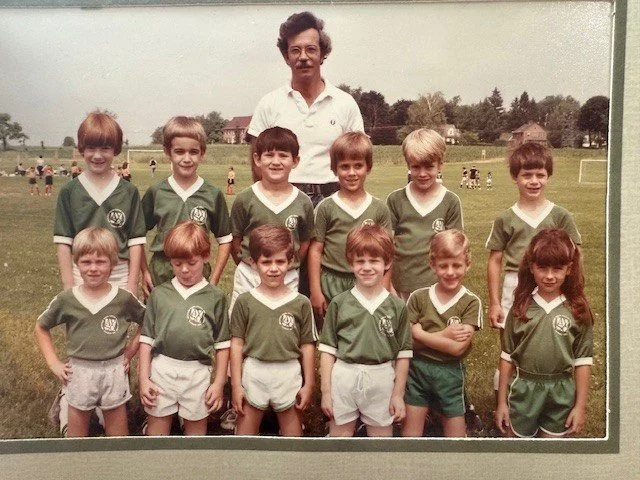
I wanted to play with more girls. I didn’t want to feel different. In my early years, I wanted to laugh, do cartwheels, and pick flowers with my friends at practice. Even in the photo above, I’m not really feeling it—I look shy, indifferent, and unsure of myself.
What I learned after years of playing soccer with boys is that many of them didn’t take me seriously. One of the few times I was acknowledged for my strength was when a boy chased me, trying to kiss me. I ran to my dad for shelter, and he told me to “deck” him. The next time the boy came at me with a smoochie face, I whacked him, and he dropped to the ground—he never chased me again.
But most of the time, I would complain to my dad—who coached my brother’s team—that “boys don’t pass,” even when I was wide open.
I still remember a Keystone State Game where I was completely available for an assist for most of the match, playing left striker (I was left-footed). I called out, “Here I am,” over and over, but I just stood there in space—dumbfounded and frustrated—after making some solid runs.
I left that game thinking; I’ve lost hope that boys will ever see me as a teammate. What’s the point of playing this sport anyway?
In 1994, my sister tried out for the “boys’” soccer team her freshman year of high school. During preseason, she did all the same drills the boys did—hoisting teammates onto her back and walking up hills. I often wonder what that felt like for her. Did she ever want to quit? Did she feel seen and included, or did she feel inferior?
Thank God there was a girls’ soccer team for me throughout high school. Playing with girls felt completely different from “guest” playing on boys’ teams—it was inclusive, fun, and communal.
I often wonder why it took so long to establish a girls’ team, especially given the attention and accolades the U.S. Women’s National Team was receiving at the time. Players like Mia Hamm and Julie Foudy were heroes to so many of us, yet those dreams of becoming successful players felt clouded by how little access we had to develop our skills alongside other girls.
And not once did I ever imagine the possibility of being coached by a woman! When I really sit with that, I think I might have pushed myself harder if I had a female coach. I might have wanted to impress her more, knowing what she likely had to overcome to lead a team. She would have had to prove herself—somewhere along the way—within a system dominated by men, maybe even competing against them for that role.
That kind of leader would have inspired me.
There’s something powerful about having a same-sex role model—it matters. Girls need women to look up to, women who pave the way and remind them just how strong and capable they are of making their mark on the world.
I often wonder how being coached by females may have shaped my confidence as a teenage athlete and student. Would my goals or dreams have been different?
Fast forward to 2026: I’m a mom of two girls who love soccer. They’ve never really known what it feels like to be discounted because of their gender—aside from the occasional moments in gym class or at recess, which is more than enough.
They’ve had access to all kinds of girls’ teams since elementary school, and that didn’t just happen by accident. It exists because people before them advocated for it—and, in many cases, invested financially to make those opportunities possible.
We’re all familiar with women’s rights issues, both abroad and here in the United States. It’s important to remember that as recently as 2022, women were still fighting for equal pay in professional soccer—despite often achieving better results than their male counterparts in regional, World Cup, and Olympic competitions!
I’m especially grateful to the U.S. Women’s National Team for demanding equal pay with the U.S. Men’s National Team. Even so, it’s striking that the women aren’t earning more than the men, given their success on the world stage. But change rarely happens all at once. Power doesn’t shift easily, nor is it released without resistance.
Below is a list of 7 things I am thinking about as it relates to coaching girls and women’s sports:
Please watch this HBO trailer and movie, LFG. It is about the U.S. Women’s National Team’s movement for equal pay. Sam Mewis, a former midfielder for the team, boldly notes, “If you want the world to look a certain way, you have to fight to get there.”
Girls need encouragement (so do boys, but that’s a conversation for another day). I see myself less as a skills-and-drills coach (travel teams hire professional coaches for that, thank goodness) and more as the girls’ encourager and advocate. Lifting them up when they’re hard on themselves, celebrating a great move, an epic assist or pass, a smart run to get open, or a powerful shot on goal—it provides me something nothing else can.
Girls need to hear positive messages about their abilities AND efforts, especially given the explicit sexist messages that have echoed across generations—things like “men are better at math and science,” “you run like a girl,” or “pretty is as pretty does.” While some of that thinking has thankfully faded, young girls are still bombarded with harmful messaging about beauty, worth, and materialism. Social media feeds them a steady diet of unrealistic images—half-dressed influencers, ultra-thin models who look miserable, and boys ranking girls based on appearance.
At least on the field, girls get a break. For an hour or two during practices and games, they can tune out all the negative messaging they hear during the day. And honestly, there’s nothing more refreshing than focusing on strength, effort, and what their bodies can do—instead of how they look or how many “likes” they get.
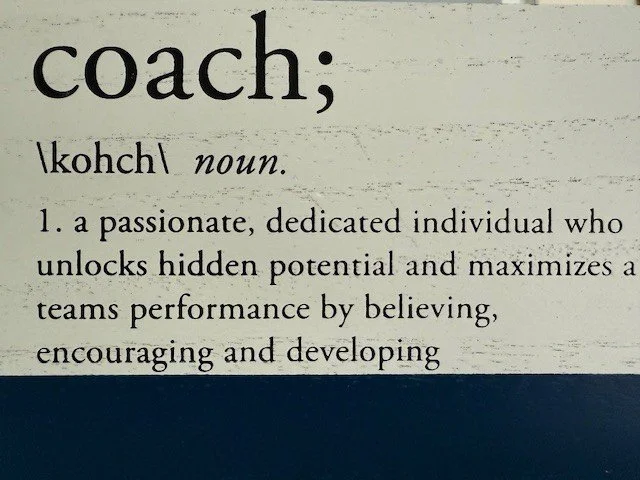
4. I bought this plaque for my dad, who coached soccer for decades. It defines a coach as “a passionate, dedicated individual who unlocks hidden potential and maximizes a team’s performance by believing, encouraging, and developing.” My favorite part of that definition is “unlocking hidden potential”. We all have unrealized potential. Who will help bring it out of us?
5. Breakthroughs. One of the most powerful moments in sports is watching a struggling player—someone who’s been putting in the effort—suddenly break through and make a play that reveals something far beyond what they’ve shown before. At first, the coach reacts with surprise, but underneath it is a quiet sense of relief: they’re finally getting it. There’s hope that this moment of success develops future self-confidence.
Then, the teammates jump to the sky in unison—shouting, sometimes in disbelief—especially if it’s a first goal. Everyone rushes to celebrate the new star, and even the crowd seems louder. The truth is, we are all cheering for one another at our core. We want and need something to rally behind.
And afterward, you can see it—the coach, the parents, the team, and the player herself all notice it: a quiet confidence that comes from proving something not just to others, but most importantly to herself.
6. Check out the Women’s Sports Foundation mission that supports equal opportunity and advocacy for women in sports. The organization suggests that when girls play sports, they develop confidence, leadership, and other valuable life skills. We’ve come a long way since Title IX—and since the days when my aunt played basketball on only half a court because organizations like the American Association for Health, Physical Education, and Recreation claimed that full-court play would be too strenuous on women’s bodies.
Sports (including dance, cheer, and movement) teach confidence, perseverance, how to lose, sportsmanship, class, teamwork, encouragement, bonding, growth, development, striving, discipline, and so much more. I coach because I believe in all the good that sports can bring to the table—and those lessons become lasting skills that no one can take away.
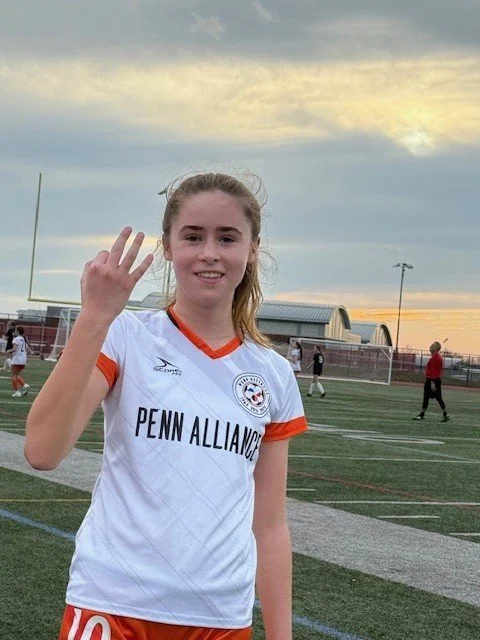
7.Anything can happen in sports! Sports can be like an inspiring drama movie. I was giving a player a ride to practice who didn’t seem very enthusiastic about soccer anymore after receiving hard feedback from another coach. I told her that soccer is so much more than one email or a few weeks of a season—that she should shake it off and trust that she is a good player because she is.
Before the game, the head coach built her up and challenged her to go for a hat trick. Lo and behold, this player indeed had a hat trick, and it’s the biggest smile of classy pride I have ever seen on her face. I was so grateful to be part of that moment.
Although my dad always told me that parent coaches can’t be partial to their own kids on a team (and he wasn’t, at least externally!),
To my very own players, Julia and Ellie,
You probably already know that you are my most special players on any field or court. My heart does cartwheels when you make a good pass, shot, run, assist, or play. More importantly, I am proud of you when you encourage your teammates, stay after practice to refine a skill, show appreciation for your coach, or welcome a new player with kindness.
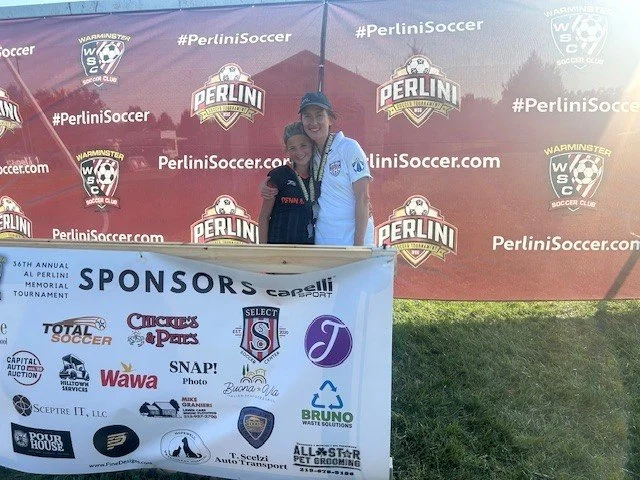
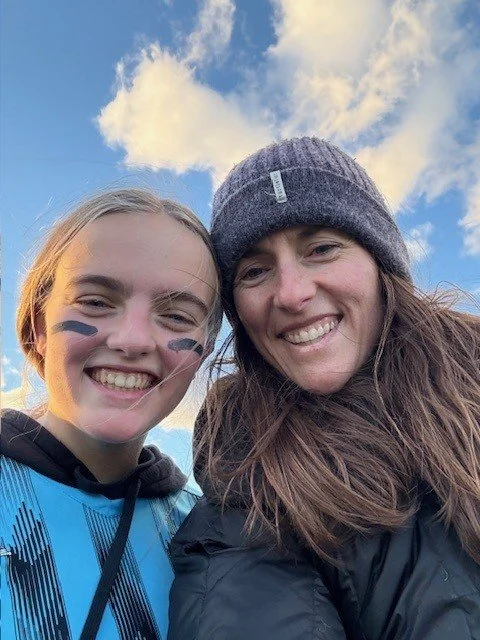
Although my coaching is likely coming to an end, I will always treasure the privilege of encouraging my girls and their friends—on and off the field—as some of the most meaningful and fun moments of my adult life. I can no longer play soccer because of injuries and surgeries, so coaching has been the next best thing to being in the game.
Until the World Cup, my Friends!
LoveWell,
Kim